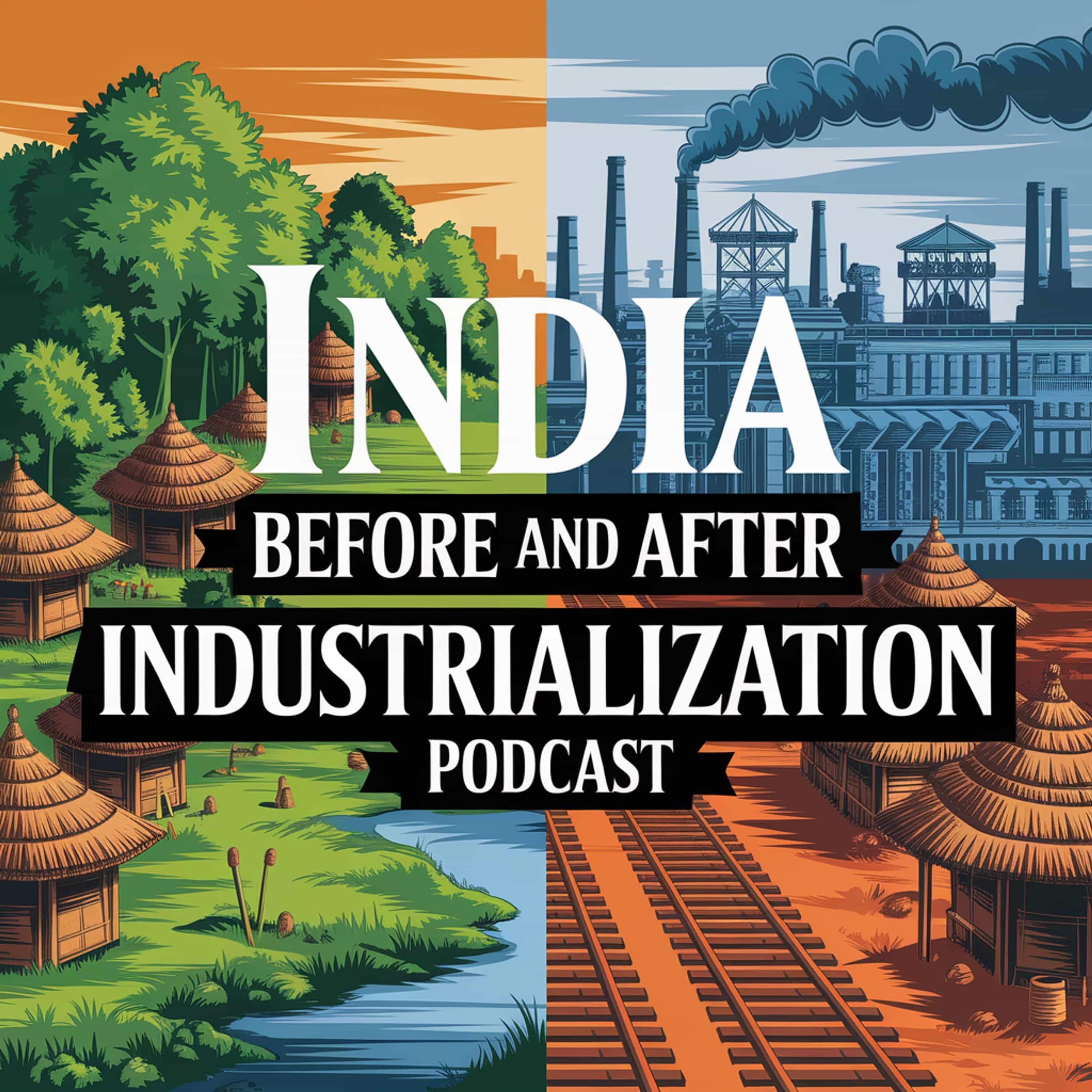
Colonial India: After Industrialization
From the rise of the British East India Company to the societal impact of railways and the ideological shift in education, this episode unpacks the multifaceted ways colonial power shaped India. Learn about key legislative milestones, technological innovations like the Indian Railways, and the emergence of an English-speaking elite that fueled future nationalist movements.
This show was created with Jellypod, the AI Podcast Studio. Create your own podcast with Jellypod today.
Get StartedIs this your podcast and want to remove this banner? Click here.
Chapter 1
The British Expansion: From Commerce to Control
Eric Marquette
The transformation of the British East India Company—it's a story that’s as dramatic as it is impactful. In the early 17th century, they were just merchants, really, trading in spices, cotton, and eventually opium.
Eleanor Prescott
Opium—oh, now that's a controversial one. It wasn't just trade, was it? It spiraled into something much bigger… darker, even.
Eric Marquette
Exactly. By the mid-18th century, the Company had become far more than a trading organization. They started to exercise political power, primarily in Bengal, which became their stronghold after their military victory at Plassey in 1757.
Eleanor Prescott
Right. And once they got their foothold, they didn’t just stop at trade. They went on this—you know—this aggressive expansion spree, didn't they?
Eric Marquette
Absolutely. And their strategy often relied on this intricate network of local collaborators. Indian merchants and bankers became indispensable, particularly with their financing systems. This allowed the British to navigate India's very complex rural and urban economies with surprising efficiency.
Eleanor Prescott
Local rulers, too. I mean, they started aligning with the British out of desperation, didn’t they? Like, if you can’t beat ‘em, join ‘em kind of vibe.
Eric Marquette
Yes, and unfortunately, many of these alliances weren’t exactly equal partnerships. Take the "subsidiary alliance" system, for instance. Local rulers could keep their titles but not actual power. The British stationed troops in their territories and dictated terms that often left these rulers humiliated and powerless.
Eleanor Prescott
And it wasn’t just humiliation. I mean, there must’ve been this sense of—what’s the word—inevitability? Like, no matter what they did, the British had leverage.
Eric Marquette
That’s right. The leverage wasn’t just military. Legislative acts paved the way for even greater control. Take the Regulating Act of 1773. It marked the beginning of British parliamentary oversight of the Company's activities in India—essentially an acknowledgment that the Company wasn’t just a trading entity anymore.
Eleanor Prescott
And then they doubled down with the Charter Act of 1813, right? That’s when they started framing it all as a moral responsibility to, you know, "civilize" India.
Eric Marquette
Yes, the so-called civilizing mission. But underneath that, these legislative acts were about making sure the Company remained profitable while tightening Britain's grip on governance. And, well, this eventually set the stage for transitioning power from the Company to the British Crown itself.
Eleanor Prescott
But let’s not forget, those legislative changes also had consequences for, like, everyday Indians, right? Farmers, traders, even the zamindars who were suddenly thrown into a system that didn’t really care about—
Eric Marquette
—Local realities. Exactly. And that's what we'll notice as we step further into this history. British expansion wasn’t just political; it disrupted social and economic fabric in ways that India is still grappling with today.
Chapter 2
Innovations in Infrastructure and Their Societal Impact
Eric Marquette
Building on that disruption, let’s move to the railroads and telegraphs. These weren’t just technological marvels—they became essential tools in reinforcing Britain’s control over India. They streamlined troop movements, expedited resource extraction, and reshaped the very foundation of Indian society, but not in ways that many locals would have considered beneficial.
Eleanor Prescott
Yeah, and isn't that the irony? They always painted it as "progress," but it feels like a one-way track—pun intended—towards colonial convenience.
Eric Marquette
Exactly. Take the Indian Railways, for example. It connected vast regions of the subcontinent, but the intent was rarely, if ever, about fostering unity among Indians. The primary goal? To move British goods and troops as efficiently as possible.
Eleanor Prescott
Which kinda makes you think—what about the local communities? I mean, they’re living by these railway lines, seeing foreigners zip through their villages, yet their own mobility didn't improve much, did it?
Eric Marquette
Not at all. For many Indians, these railways were disruptive. Land was taken to construct the tracks, often without adequate compensation. Local economies sometimes collapsed because markets were restructured to serve British economic goals. And socially, it exacerbated class divisions. The railways weren’t for everyone.
Eleanor Prescott
Oh, and don’t forget—there were these strict separations on the trains, too, weren’t there? Like first-class carriages for Europeans only? That must’ve just driven home the point that—
Eric Marquette
—This wasn’t a system designed for equality. Exactly. It mirrored the broader inequities of colonial rule.
Eleanor Prescott
What really intrigues me, though, is how some Indians managed to navigate this system. Like the entrepreneurs who stayed afloat despite colonial restrictions. Take Jamsetjee Jeejeebhoy. He’s a fascinating case, right?
Eric Marquette
Absolutely. Jeejeebhoy is a prime example of resilience. He built trading networks in opium and cotton, and even engaged with the British on his own terms. But, even for someone like him, colonial policies often created barriers that were impossible to bypass.
Eleanor Prescott
So, basically, success stories like his come with this constant tug-of-war? It’s like, any progress was—what’s the word I’m looking for—curtailed?
Eric Marquette
Or conditional. Yes, conditional on playing by British rules, which often meant sacrificing autonomy. The telegraph system is another example. It revolutionized communication, but who really had access to it? Not the local farmers or small-time traders. It was primarily a tool of empire.
Eleanor Prescott
Oh, totally. And isn’t it fascinating how these "modern" inventions ended up deepening divides rather than bridging them?
Eric Marquette
It’s another layer of the complexity of colonial rule—progress, but only for a select few, and often at the expense of everyone else.
Chapter 3
Education and Ideology in a Colonial Context
Eric Marquette
This idea of selective progress really crystallizes when we look at education during the British Raj. It wasn't just about spreading knowledge; it was deeply ideological—whether to preserve traditional knowledge systems or enforce an English, Western-centric framework that served colonial interests.
Eleanor Prescott
Oh, yeah, the whole Orientalist versus Anglicist debate. I’ve always found it fascinating, like, the sheer worlds apart those two visions were. But, of course, the Anglicists won out, right?
Eric Marquette
Exactly, and that victory was crystallized in Lord Macaulay’s infamous 1835 Minute on Education. He argued that English should be the medium of instruction—essentially dismissing India’s rich literary and intellectual traditions as inferior.
Eleanor Prescott
Which is just wild to think about. I mean, imagine labeling entire languages and cultures as—what was the term he used?—“barren.”
Eric Marquette
“Barren and slavish.” Yes, it’s telling, isn’t it? That decision wasn’t just pragmatic; it reflected this ethnocentric belief that British culture was inherently better, more refined.
Eleanor Prescott
But then—you’ve gotta admit—it did have some, er, unintended consequences. Like, didn’t this whole English education thing fuel the rise of an educated Indian elite? The very people who would later lead nationalist movements?
Eric Marquette
Absolutely. That’s the irony. By introducing Indians to ideas of liberty, democracy, and justice—concepts central to Western political thought—the colonial system inadvertently sowed the seeds of its own demise.
Eleanor Prescott
So, the very tools they used to govern ended up arming the opposition. Talk about poetic justice, huh?
Eric Marquette
Indeed. Figures like Raja Ram Mohan Roy, who played a critical role in early social reforms, were direct products of this education system. And yet, we can’t overlook the flip side—
Eleanor Prescott
—How it also widened social divides?
Eric Marquette
Precisely. Access to English education was largely restricted to elite, urban families, creating a privileged class that benefited while the majority of Indians were left out of this so-called progress.
Eleanor Prescott
It’s kinda like modern education disparity, isn’t it? Where the privileged get the tools to succeed, and the rest are, well, left to fend for themselves.
Eric Marquette
A striking parallel, yes. And while education reformers like William Carey introduced valuable initiatives like translations and textbooks, the broader system reinforced systemic inequalities. Indian society was left grappling with a limbo between tradition and colonial modernity.
Eleanor Prescott
And then there’s the cultural identity part. I mean, having to learn in a foreign language while, at the same time, being told your native culture isn’t good enough? That leaves scars, doesn’t it?
Eric Marquette
It does. Identity, language, and access to knowledge became deeply political under colonial rule. And we see echoes of that struggle in former colonies around the world today—where colonial legacies still influence education systems and cultural preferences.
Eleanor Prescott
Honestly, it’s a lot to unpack. Colonialism didn’t just alter economies or systems of governance; it went straight for the heart—cultures, identities, how people thought about themselves and their futures.
Eric Marquette
And on that note, Eleanor, I think we’ve traced quite a journey today—from the mercantile ambitions of the East India Company to the profound psychological and cultural shifts sparked by their educational policies.
Eleanor Prescott
It’s been such a deep dive, hasn’t it? And, oh, so many lessons to reflect on for today’s world.
Eric Marquette
Exactly. Thank you to everyone listening in—we hope this discussion shed some light on the era of British Company Rule in India. It’s a history with lessons still relevant to understanding power, privilege, and progress.
Eleanor Prescott
Take care, everyone. We’ll catch you next time!