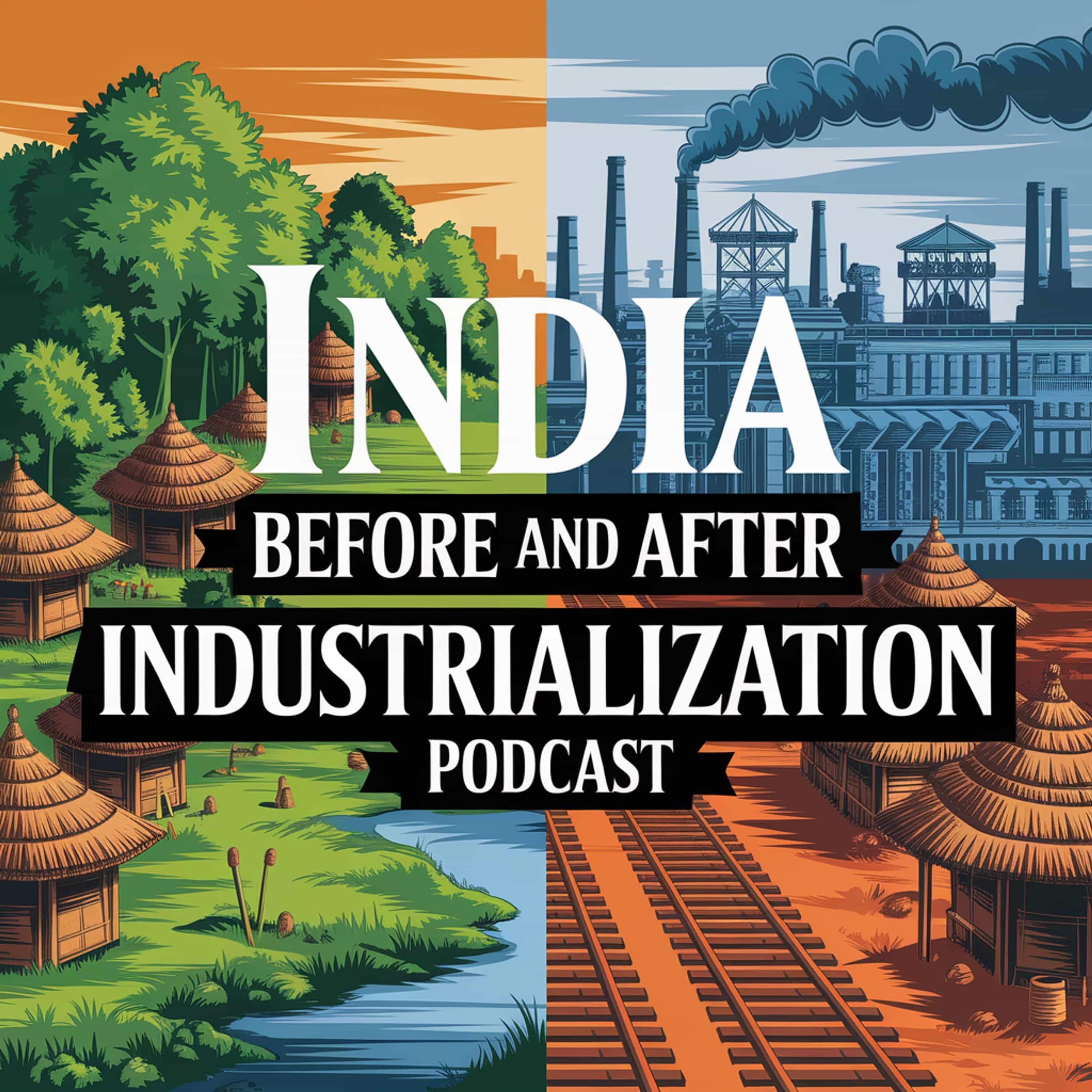
The Rise, Decline, and Revival of India's Textile Heritage
Discover how India once dominated global trade with its exquisite textiles, only to face devastation under British exploitation and de-industrialization. Join Eleanor and Eric as they unravel the cultural, economic, and human consequences of these transitions, culminating in Gandhi's movement for economic resistance. This episode highlights lessons from India's textile journey and its role in the fight for independence.
This show was created with Jellypod, the AI Podcast Studio. Create your own podcast with Jellypod today.
Get StartedIs this your podcast and want to remove this banner? Click here.
Chapter 1
Dominance of the Indian Textile Industry
Eric Marquette
Before 1750, India was, without exaggeration, the global powerhouse of textile production. I mean, at that time, it contributed about twenty-five percent of the world’s industrial output, which is just staggering. Indian artisans and craftsmen were known for their incredible skill and precision, producing textiles that were unmatched in quality and beauty.
Eleanor Prescott
Yeah, and these weren’t just everyday fabrics either. You had Bengal muslins, which were so delicate and fine that they were literally called “woven air.” They were in high demand across Europe, treated almost like treasures. And it wasn’t just the fabrics—it was the colors, the patterns, the sheer artistry, you know?
Eric Marquette
Exactly. And this wasn’t an accident. The Mughal Empire played a massive role in creating the conditions for this dominance. Their governance provided stability—safe trade routes, well-maintained ports, and a strong taxation system that reinvested into infrastructure like roads and bridges.
Eleanor Prescott
Oh, and that infrastructure, Eric, wasn’t just functional. It was strategic. The Mughals ensured that their ports could handle large volumes of international trade, which made India the go-to place for merchants from all over the world. Portuguese, Dutch, English... everyone wanted in on that action.
Eric Marquette
They absolutely did. And the Mughals fostered full employment within the textile industry. Families could count on this massive demand for handcrafted goods, which in turn stabilized their local economies. Plus, their trade networks reached as far as China and Persia—beyond Europe even. It was domination on a truly global scale.
Eleanor Prescott
And, let’s be real, there was this undeniable allure to Indian textiles—their craftsmanship, sure, but also just the feel of it, the stories woven into each thread. It's hard to imagine a world where that kind of artistry wasn’t the gold standard.
Chapter 2
De-Industrialization and British Exploitation
Eric Marquette
India’s dominance in textiles was truly unparalleled, but as we progress into the era of British industrialization, the story takes a dramatic turn. By the nineteenth century, most of the textiles that once made India a powerhouse were being produced in British factories. The impact on India’s economy and its people was catastrophic.
Eleanor Prescott
Catastrophic might even be an understatement. I mean, imagine being one of those artisans whose family had been weaving for generations—producing incredible, handcrafted fabrics—and suddenly, you’re being outpriced by factory-made goods shipped from England. It’s heartbreaking, Eric.
Eric Marquette
Absolutely. And the shift wasn’t just about prices. British industrialists deliberately kept the new technology out of India's reach, ensuring that manufacturing jobs stayed in England. As a result, millions of skilled workers—textile weavers, dyers, traders—lost their livelihoods almost overnight.
Eleanor Prescott
And where did those workers go? To the fields. They were forced to grow cash crops, like cotton, instead of manufacturing cloth. But even that wasn’t a safety net. The policies of the British East India Company were so exploitative that farmers couldn’t afford to keep their land or even feed their families in many cases.
Eric Marquette
That’s right. The focus shifted entirely from local needs to meeting the demands of British industry. Food crops like rice were replaced by cotton fields, and the cost of basic staples just skyrocketed. This cycle created the conditions for some of the worst famines in Indian history, killing millions.
Eleanor Prescott
And the human cost didn’t stop there. With the dismantling of the textile industry, entire communities were destabilized. Families were uprooted, forced to migrate, and weavers, who were once artisans with pride in their craft, became day laborers in a system designed to keep them poor.
Eric Marquette
Exactly. I came across an account of Bengal weavers staging a protest in the early 1800s. They were frustrated and desperate, throwing bundles of raw cotton onto the streets and pleading for fair policies. But instead of helping, the East India Company cracked down further, enforcing taxes and seizing land. It was brutal, Eleanor.
Eleanor Prescott
It’s absolutely gut-wrenching. And yet, it’s not just about the economics, is it? It’s about the loss of identity. Textile production wasn’t just a job for these communities—it was their culture, their history, their art. That’s what makes it so tragic.
Eric Marquette
Yes, the story of British exploitation in India is a stark reminder of how industrial progress for one nation often comes at the expense of another. And that hard truth left enormous scars on India’s economy, culture, and social fabric.
Chapter 3
Gandhi's Vision of Economic Resistance
Eric Marquette
The catastrophic loss of livelihoods and identity endured by India’s textile communities became more than just a painful memory—it transformed into a powerful symbol of colonial exploitation. Nationalist leaders like Gandhi recognized this and turned India’s economic de-industrialization into a rallying cry for self-sufficiency and resistance against British rule.
Eleanor Prescott
Right, and that’s where the Spinning Wheel Movement comes in. Gandhi didn’t just talk about self-reliance; he wove it into the very fabric of the independence movement—literally. Encouraging Indians to spin their own cloth at home wasn’t just about making clothes; it was about building a sense of empowerment and community.
Eric Marquette
Exactly. By advocating for khadi, or homespun cloth, Gandhi was challenging the economic stranglehold of British goods. You know, Eleanor, it was such a clever move. It directly hit the British textile industry, while fostering a grassroots movement that gave power back to the people.
Eleanor Prescott
And it wasn’t just practical—it was deeply symbolic. I mean, think about it: by wearing khadi, Indians were rejecting the British narrative that they had to rely on foreign goods to be “civilized.” It was an act of defiance.
Eric Marquette
It really was. Gandhi's spinning wheel became a lasting symbol of independence, a reminder of India’s once-thriving textile heritage. And more than that, it was a symbol of unity, something that transcended class and region. Spinning wasn’t just for artisans—it was for everyone, from peasants to political leaders.
Eleanor Prescott
And you know, Eric, what’s amazing is how timeless this idea is. Look at movements today encouraging people to shop local, to support small businesses. There’s such a parallel there. Gandhi’s vision wasn’t just about resisting colonial oppression—it was about creating a sustainable, self-sufficient community.
Eric Marquette
Absolutely. And while the spinning wheel might seem like a relic of another time, the principles behind it—self-reliance, sustainability, even dignity in labor—those ideas resonate just as strongly today. It’s a testament to how Gandhi’s philosophy continues to inspire.
Eleanor Prescott
It really does. It’s such a fascinating legacy, isn’t it? A simple, everyday object like a spinning wheel became one of the most powerful symbols of resistance in modern history. And on some level, it reminds us that even small, local actions can ripple out and challenge the biggest systems.
Eric Marquette
Well, that’s all for today. Gandhi’s vision of economic resistance is a story that bridges history and modernity, and it's been fantastic exploring it with you.
Eleanor Prescott
Couldn’t have said it better myself, Eric. Thanks for listening, everyone, and we’ll see you next time!